Property
From quarter-acre block to apartment life
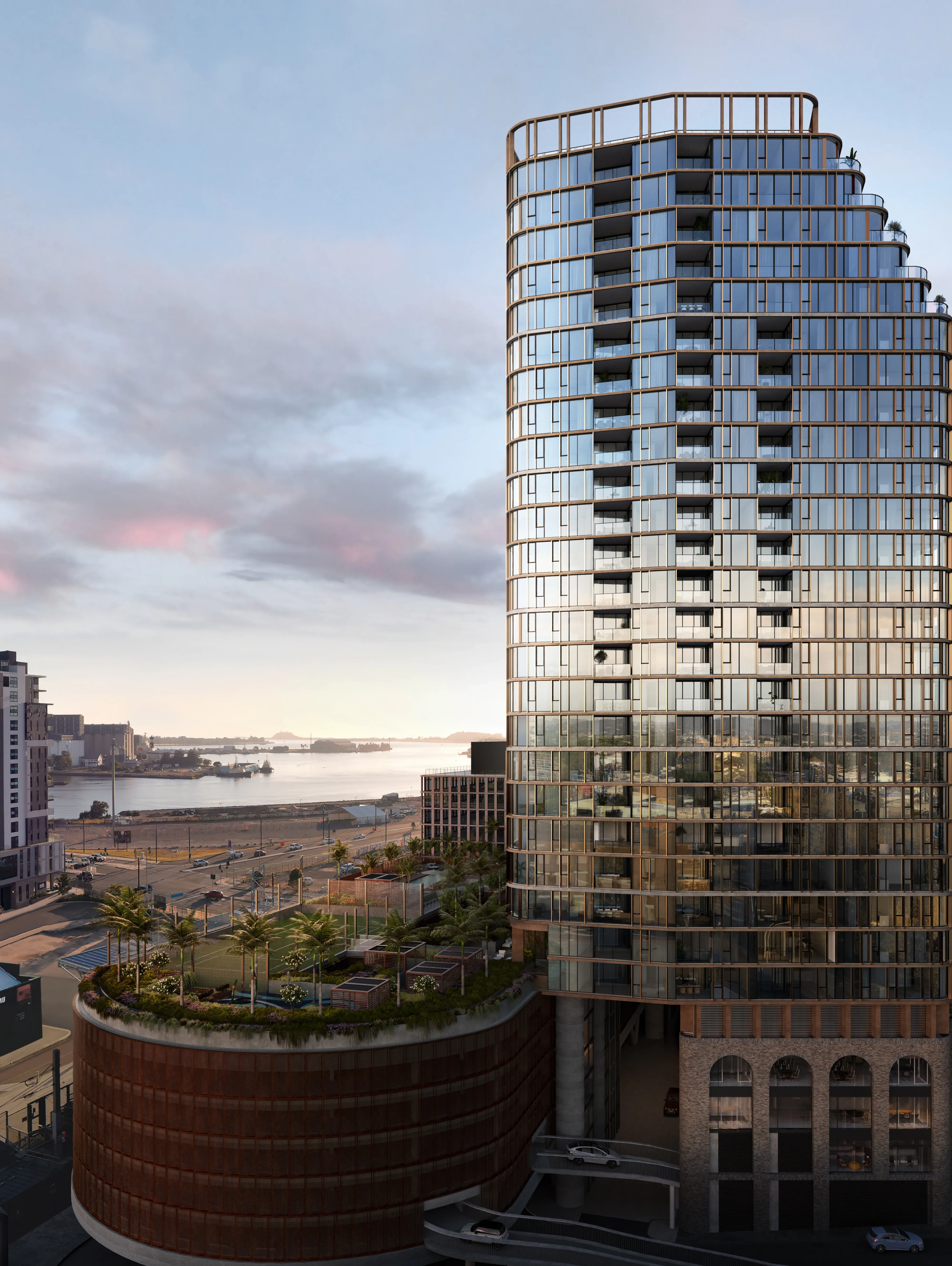
The Store, Newcastle © DOMA
Words Emma Macdonald
The great Australian dream used to be owning a home with a front garden and a back yard. But for younger generations finding themselves priced off the quarter acre block, it’s time to reassess that dream.
These days, a roof over one’s head is more likely to be within an apartment complex or employing creative accounting in the form of “rentvesting”.
Australia’s multi-unit sector is poised for a major rebound as lower entry costs to apartment ownership, lifestyle benefits of lock-and-leave homes, and the desire for medium-density inner-city amenities all erode the supremacy of a house on some land in the suburbs.
According to the latest analysis by The Housing Industry Association (HIA), conditions are aligning for a sharp lift in apartment commencements from 2026 onward. The previous downturn began in 2017 and was triggered by the introduction of additional taxes on foreign investors and restrictive lending caps imposed by Australia’s prudential regulator. These interventions caused apartment starts to collapse even before the pandemic, and subsequent government disruptions to the market, construction cost escalation and the two-year halt to migration further deepened the decline.
But this year, units are beginning to outpace detached house prices in several markets. If this trajectory continues, new apartment construction will once again become financially viable as existing stock values converge with the cost of new builds.
According to the HIA’s Chief Economist Tim Reardon, forecasts bode well for Gen Zs who still see home ownership as an important step in their lives and don’t care if that home is located within a block of units. Multi-unit starts in 2025 were 21 per
cent higher than the previous year and are expected to reach the 100,000-mark peak in the 2030s.
Tim says this is part of a 15-year shift away from detached houses on blocks of land, which, for so many, are too expensive to afford.
“Land has always been expensive, and now it comes at such a premium it makes much more sense for many Australians to move into multi-unit dwellings.”
Tim notes the rise of “rentvesting”, a term which describes the increasingly popular practice of buying a more affordable home in a rural or regional area and renting a more lifestyle-oriented home in the city which would normally be out of budget to buy.
While it may sound complicated to pay both rent and a mortgage, rentvesting is a more affordable path to get into the property market, allowing the owner to build equity over time with an eye to eventually trading up.
If that is financially possible.
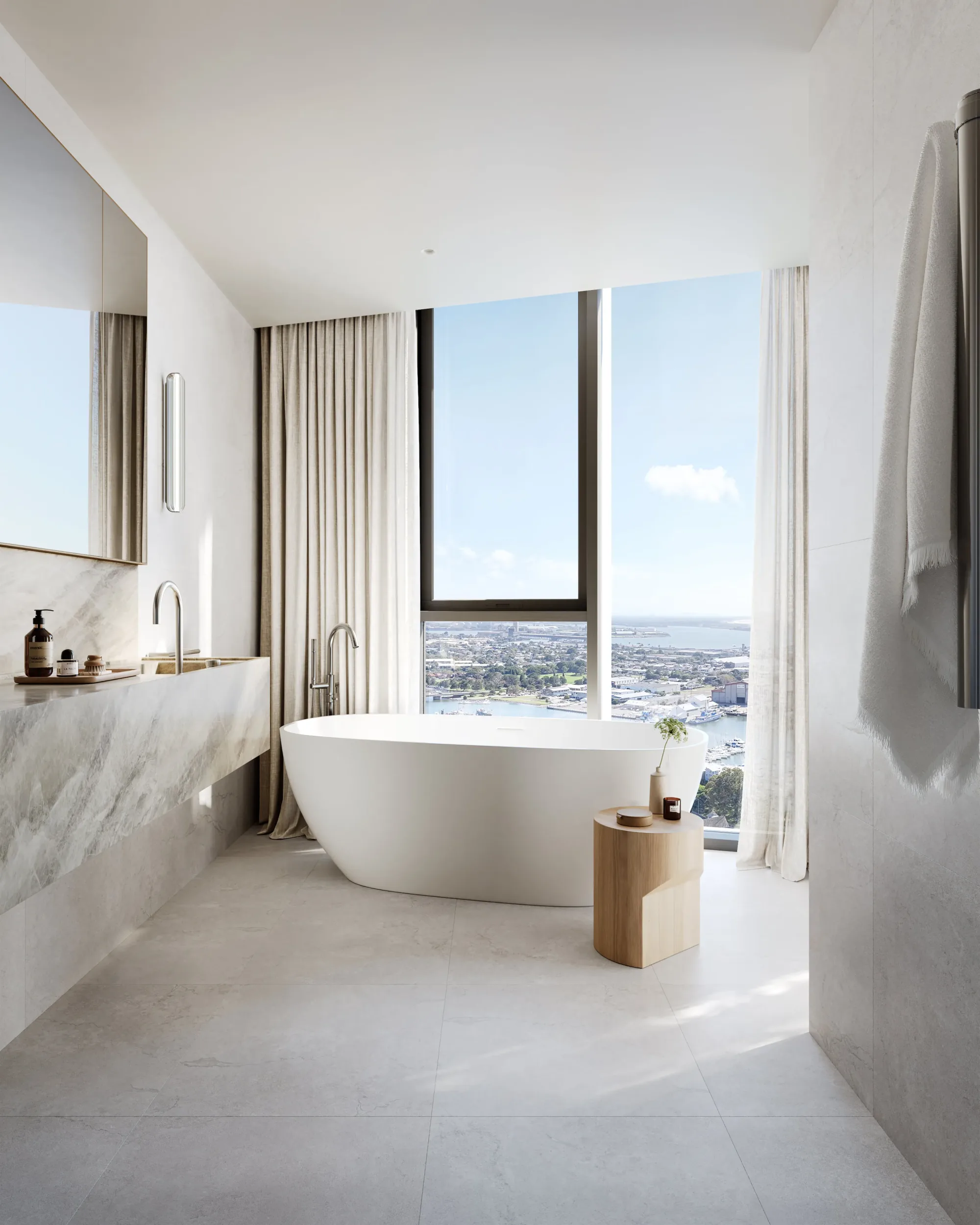
The Store, Newcastle © DOMA
An analysis of Housing Cost Trends and Projections by Associate Professor Ben Phillips from the Australian National University’s Centre for Social Research and Methods found in 2023 that housing costs as a share of income were at their highest rate since at least 1984. The key driver of this is mortgage interest rates and more significant debts compared to earlier decades. He notes rent costs have not increased as dramatically when averaged across all renter households.
Land has always been expensive, and now IT comes at such a premium it makes much more sense for many Australians to move into multi-unit dwellings.
The sobering part of all this is that while 92 per cent of renters aspire to own their own home, less than half think they will. It’s part of a phenomenon that American Economics Professor Scott Galloway describes as “intergenerational theft”.
A social media and podcasting sensation who espouses views on not only the financial markets, but everything from toxic masculinity to the erosion of American democracy, Professor Galloway believes older generations have accumulated wealth and opportunities directly at the expense of their children and grandchildren.
He argues that this “theft” is the result largely of Baby Boomers and Gen Xers reaping the benefits of more affordable housing and education, and failing to oppose Government policies that have led to younger generations facing skyrocketing costs and greater barriers to financial success. He has been scathing of government spending, particularly the COVID-19 stimulus, for contributing to inflation and asset inflation (housing and stocks) that primarily benefits those who already own assets.
Professor Galloway also advocates government support for public universities to lower tuition, making a case that some institutions are using a scarcity model, similar to luxury brands, to drive up tuition prices, while large endowments suggest they are acting more like hedge funds than public service institutions. He’d rather see bailout funds redirected to public universities to cut costs and increase enrolments, thereby making higher education more accessible and affordable for the current generation.
With education comes better job prospects, higher standards of living and an entrée to property ownership.
Outspoken on the mental health crisis among young people, which he links in part, to the negative effects of social media, Professor Galloway says older generations did not have to confront many of the economic (not to mention environmental, political and social) problems of youth today and yet show very little interest in making a difference to those who feel pretty despondent about their circumstances.
Back in Australia, Professor Nick Biddle, Head of the Australian National University’s School of Politics and International Relations recently published a major research paper which he entitled “The Erosion of Hope”.
The key findings are that Australians are increasingly pessimistic about the future, with declining trust in government and institutions and higher levels of financial stress.
Life satisfaction has dropped to its lowest level since COVID-19 lockdowns, with mean satisfaction falling to 6.45 out of 10—a statistically significant and substantial decline from 6.78 in early 2023, and 7.05 prior to the Black Summer bushfires and COVID-19 pandemic.
Financial stress remains high, with 33.1 per cent of Australians finding it difficult or very difficult to meet household expenses on their current income, a rise from 29.9 per cent in October 2024.
This pervasive pessimism extends to both personal circumstances and the broader future of the country, with only 21.7 per cent of Australians believing their life has improved in the past year, while 31.0 per cent believe it has worsened—the worst outlook recorded since early COVID-19 lockdowns.
The long-term national outlook is also overwhelmingly negative, with 50.3 per cent of Australians believing life will be worse in 50 years, while only 16.3 per cent believe it will improve. It’s unsurprising then, that nostalgia for the past is widespread with 51.8 per cent believing life was better 50 years ago, despite major improvements in life expectancy, real income, and education levels.
A father of two teenage sons, Professor Biddle is genuinely concerned about the uncertain economic and political structures that his sons will be navigating as they grow older. But he warns against romanticising some bygone era.
“When I was their age, youth unemployment rates were in the high double-digits but are now less than 10 per cent. But, more than any time in recent history, the economic structure of Australia 10 or 20 years into the future is very hard to predict.
The long-term national outlook is over-whelmingly negative, with 50.3 per cent of Australians believing life will be worse in 50 years, while only 16.3 per cent believe it will improve.
“It is definitely true that homeownership has featured very differently in the lives of young Australians and will do so into the future. But part of this is a good news story. Far more young Australians are completing one or two degrees and travelling the world. Far fewer Australians are having children when they are young and not ready.
“These trends have delayed home ownership. Not because young adults can’t afford it, but because they are making a choice,” says Professor Biddle.
“And if we expand our definition of wealth to include human capital, then I am not sure that young Australians aren’t, on average, far wealthier than we were at that age. But of course, human capital doesn’t have a roof. For too many young Australians, once they are ready to make the choice to purchase a home, it is more difficult than it was for most of the post-war period.”
He also shares Professor Galloway’s concerns on inter-generational inequality, suggesting older Australians have allowed house prices to increase far faster than they should have, to the detriment of those entering the market.
“The challenge as a country is to ensure that the burden of a more sustainable housing footprint doesn’t just fall on younger cohorts. It doesn’t have to be an apartment, but an apartment should be a viable option, and we do need to make sure that those who live in apartments have access to the same amenities as those who live in free-standing houses.
“The main goal needs to be to ensure that the housing stock continues to expand, but in a sustainable way, and that the family you grow up in doesn’t overly determine the quality of your housing now, or into the future.”
But there are bright spots to his research.
“What I was most surprised by when analysing our survey data from earlier in the year is that younger Australians were far more optimistic about the future than the rest of the adult population. 18- to 24-year-olds in particular, but those aged 25 to 34 as well, were far more likely to say that life will improve rather than worsen in the next five or 50 years, not just for them as individuals, but for society as a whole.”
Share this article
More from Edition 16
The war on truth
In 2025, Australian journalist Bryce Corbett sat down with a group of mums in Estonia.

From KYLIE to RHODE: Inside the billion-dollar celebrity beauty boom
It’s hard to name a celebrity who hasn’t entered the beauty space. From Gwyneth Paltrow’s LA luxury wellness brand, synonymous with a more left-of-field approach to beauty, to Hailey Bieber’s clean-girl aesthetic-driven cosmetics company, it seems that celebrities can’t resist getting into the beauty boom.